

Curl up
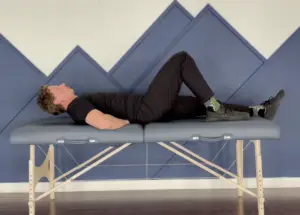
This one is very easy to get started feeling the abdominals work. It also works the muscles in the front of the neck quite well. Just lift your head and shoulders up slightly towards the ceiling while lying on your back. Try not to roll or crunch (look up, not towards your feet), that will actually make it too easy.
Side plank
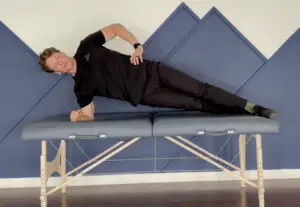
This one is great for working the obliques and the QL. You can do it from your knees or your feet as shown. Try to get/keep your body in a straight line from shoulders to knees/feet.
Pallof Press
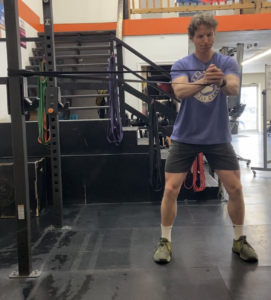
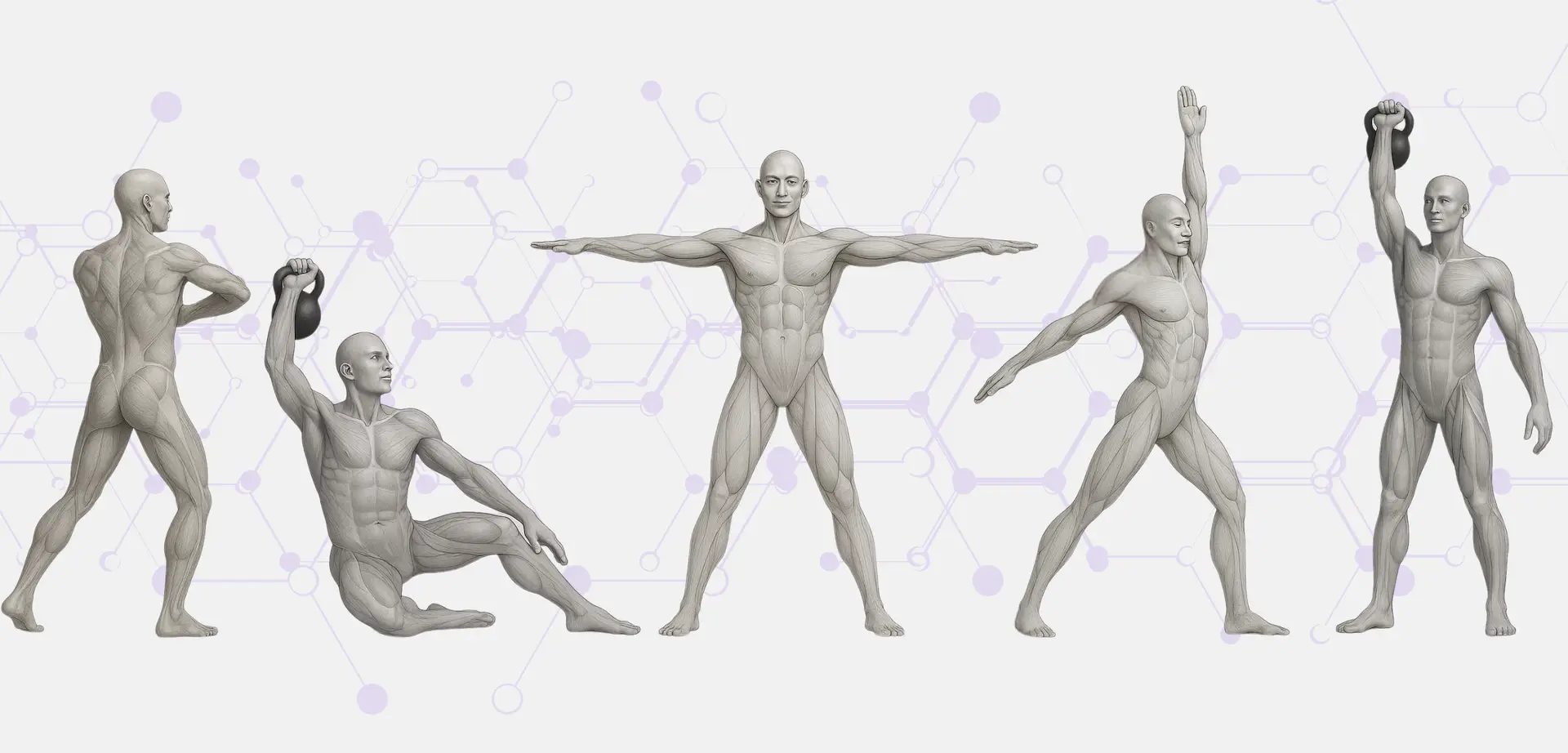
This is a beginner rotational exercise. It is working the muscles that produce a twisting force, but by just resisting the movement it is much easier to tolerate when recovering. If you don’t have a resistance band, you can just get into the same position with your hands clasped together and your arms reaching out in front of you and push sideways into a door frame.
Bird Dog
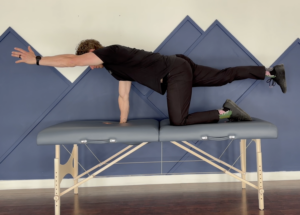
This can be a relatively easy one for many people, but it can be progressed in multiple ways to produce some challenge.
Glute Bridge

Although this isn’t really a ‘core’ exercise, it does fit in really well with the others and is a great place to start working your hips after injury. It is convenient if you are already doing some of the other exercises and can be progressed along with the others towards the same functional goals.
How to Progress
Before we get into making these more difficult, let’s first say that if you can’t do these because the pain is too intense you should consider taking the LBPfix quiz to see if you qualify for the program. The program can get you back to moving and exercising pain free so that you can start building a stronger core. Check it out or send it to a friend that needs help.
Okay, now onto the progressions.
Increase Reps/Duration
This is a great way to advance in the short term. When you are first starting out with these exercises, you will likely be able to add a rep or two per set every time you do the exercise. The higher the reps or the longer the duration of a hold though, the more you are working on muscular endurance rather than strength. Both are good, but improving strength will take longer, so don’t wait too long to make it harder.
Increase Sets
This is a great way to increase the amount of work you do while keeping the difficulty high for increased strength. You can add sets in the same session, or on different days. Practice makes perfect right? Somewhere around 3-5 sets of an exercise is a good place to be in general for many different resistance exercises.
Increase Difficulty
Some of the exercises listed can be increased in difficulty without much of a change. For example; you can just consciously contract your abdominals more intensely than necessary. This is a good way to practice a big ‘core brace’ (IAP) for the eventual progression to more difficult/heavier exercises.
Others are better progressed by advancing to a more difficult exercise. In general, the long term progression for strength exercises should be to a greater difficulty. Often, this will require adding external load by using weights or other resistance. Here are some progressions for the exercises listed:
Curl up → dead bug → ab wheel rollout
Side plank → Side plank on one leg → Suitcase Carry
Pallof Press → Split stance pallof → Cable/RB chop
Bird Dog → Low bear shoulder taps → bear crawl
Glute bridge → Single leg glute bridge → SL RDL
Common Errors
The most common error we see is going too quickly. Many exercises are more difficult when you move slowly, and you lose the challenge if you go too quickly. The challenge is the whole point, so don’t try to make it easier, try to make it harder!
Another common mistake is just going through the motions without focus. This is still better than nothing, but try to focus on what you are doing and what you want to get out of the exercise. This gets more important the stronger you get. You will stop making progress at some point if you are not putting in a focused effort.
Integrating Routines
If you are just getting started on strength training, or pain is stopping you from doing other exercises the exercises listed can be a good starting point. If you are already doing other exercises or activities, these can be an addition for extra core strength and endurance. Or they can even be a good warmup or ‘primer’ if you are already quite fit.
The LBPfix program has a progression built into it that is tailored to your pain type. So if you want to get started with doing something effective click the link below to take the qualifying quiz.
 Take our 2-minute quiz to find out if you’re a good candidate to our program – no strings attached!